

How does NFL Roster optimizer work?
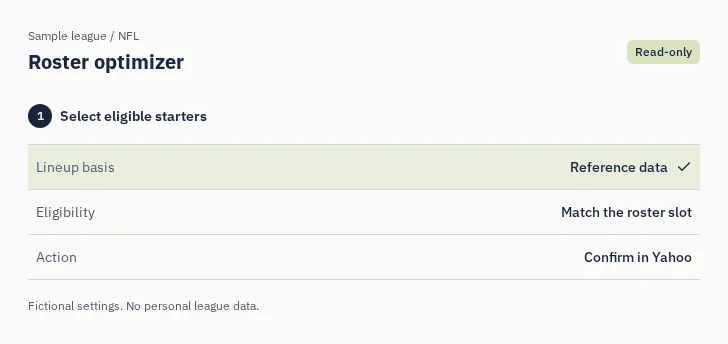
Compare an eligible starter and alternative, then examine the assumptions behind their production totals. A lineup decision needs more than the largest displayed number: availability, position constraints and the relevant time window all matter. The current reference-based view is useful for exploring the structure of a comparison, not for claiming a personalized live projection.
What matters in NFL leagues?
NFL start/sit comparisons need to distinguish a one-quarterback league from superflex and to respect running-back, receiver, tight-end and flex eligibility. PPR and non-PPR change player production. Reference comparisons can illustrate those choices but do not establish this week’s actual projected output.
What should you verify?
Current optimizer outputs use disclosed reference data rather than fresh projections from your Yahoo roster. Illustrative totals are not validated forecasts. Confirm current injuries, starting assignments and your own scoring settings before using a comparison to inform a real lineup move.
Before your next NFL move
For a weekly football decision, first identify the scoring period and the lineup slot at stake. Then check whether the available evidence concerns season totals or the upcoming week. A season-level ranking cannot answer every Sunday start/sit question. Keep the official league rules and current team availability reports beside the comparison, especially when a keeper cost or a bye-week absence could change your choice.