

How does MLB Player & keeper rankings work?
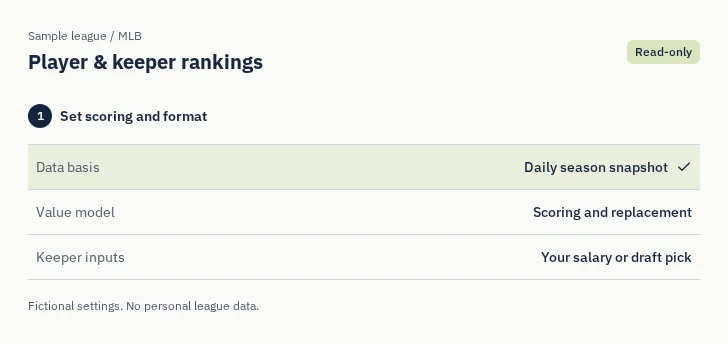
Choose the scoring format, keeper or redraft league, and auction or regular draft. Position buttons make the pool easier to inspect. The primary value changes with those choices: replacement value, modeled auction dollars or keeper surplus. Enter the actual salary or surrendered pick when comparing keepers rather than treating a default cost as your league’s contract.
What matters in MLB leagues?
MLB rankings support points and five-by-five categories, with dedicated hitter and pitcher position filters. Category comparisons separate hitter and pitcher pools and account for ratio impact. Auction values are modeled budget allocations; keeper surplus requires a real salary, and neither value assumes future playing time beyond the available season components.
What should you verify?
The displayed refresh date records a successful retrieval, not the provider’s projection release date. Stale data stays labeled delayed. Confirmed season-ending absences do not belong in redraft recommendations. These are current-season comparisons, not dynasty forecasts or promises of profit; the separate legacy keeper tool remains reference-based.
Before your next MLB move
For a baseball decision, confirm the scoring window, eligible lineup slot and whether the player’s expected role is established. Season totals do not guarantee a start in the next series. Pitching ratios require attention to innings volume, while hitter comparisons need the relevant scoring categories. Review the official league limits, current team announcements and waiver conditions before converting any comparison into a roster transaction.